
Table Of Contents
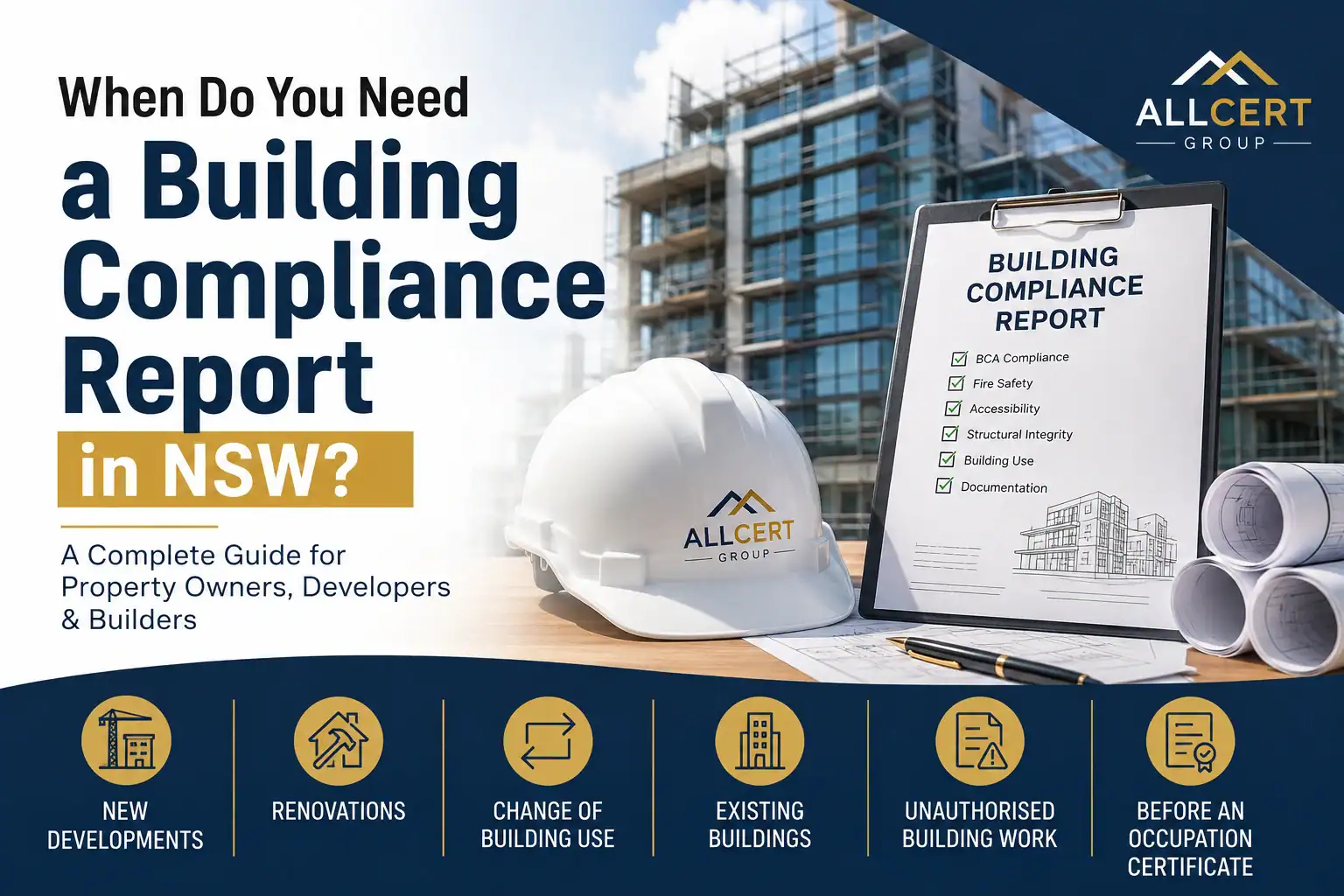
When preparing plans and beginning construction on building projects in New South Wales, there is much more involved than just that. Depending on the nature of the project, condition of the building, its intended use and the approvals that are required, a professional assessment may be necessary to determine if the building and/or works comply with relevant approvals.
The building compliance report can be of great value to property owners, developers and project teams to help them gain a clear understanding of potential problems before they turn into expensive delays. It can evaluate project aspects to appropriate requirements such as the National Construction Code (NCC), relevant approval conditions and other relevant standards.
A building compliance report should not, however, be considered as an alternative to a statutory approval or certificate, but it is important to understand that this is the case. Documentation and approvals needed will vary from person to person and depend on NSW regulations.
So, when is it advisable to get a building compliance report in NSW?
New Developments
A compliance assessment may be of great benefit when the planning and design of a new development is in progress.
Construction documentation might have to prove conformance to relevant building needs before building starts. Being aware of possible problems at an early stage allows for a reduction in the risk of redesign, delays in approval, and unforeseen changes during construction.
The professional compliance review can focus on the following:
- Building classification
- Fire safety requirements
- Accessibility and access provisions
- Building design requirements
- Performance Solutions
- Relevant NCC provisions
There are also specific requirements for NSW regulated buildings in relation to the Design and Building Practitioners framework. The NSW Government guidance says that prior to the issuance of relevant certificates, regulated designs and compliance declarations must be furnished.
Early arrangements of a compliance assessment can give developers more confidence that any potential issues are identified before they impact on the construction program.
Renovations and Alterations
Not all renovations will be assessed or approved at the same level. Changes and additions that are larger, however, can impact other key elements of the existing building, such as fire safety, structural capacity, access and building classification requirements.
This is especially critical if it is proposed that the work alters the function or interaction of a portion of a building with the current systems.
If alterations or changes are under consideration, for instance, the NSW certification requirements give a particular emphasis to fire protection and structural capacity. A certifier needs to consider whether the conditions that are relevant remain being met or not.
A building compliance report may, therefore, come in handy prior to extensive renovations as it can answer the following questions:
- Will the proposed work impact compliance already in place?
- Will more improvements be needed?
- Are there any changes to the proposed design?
- Do there exist conditions that may cause problems for approval?
An early review can provide project teams with valuable information to inform decision making rather than uncover large problems after the work is complete.
Change of Building Use
One of the most significant scenarios to consider post-construction is a change of use.A change of use is an area where building compliance needs to be carefully evaluated.
A land use change from one use to another, or within a building, can lead to different building and regulatory requirements. A change in use could impact:
- Building classification
- Fire safety measures
- Emergency exits and paths of travel
- Accessibility provisions
- Structural requirements
- Occupation requirements
In NSW, an Occupation Certificate (OC) is necessary either to use a new building or to re-use an existing building. The building should conform to relevant building regulations and be fit for its intended purpose based on its relevant building classification.
This is why it is important to get professional compliance advice prior to committing to a change of use, in order to establish if additional work or upgrades are required.
Existing Buildings
Building compliance reports are not only relevant to new construction.
A compliance assessment could be necessary if an existing building is to be subject to alterations or renewal, or if a new use is being considered, or if an issue has been raised or concerns have been raised about whether the building complies with the requirements.
Older structures can be particularly challenging due to:
- Requirements in this standard may differ from previous standards.
- Original records might not be complete.
- Changes over time may have taken place.
- System changes may have occurred in the building.
- Once more work is done, existing conditions may require investigation prior to further work.
A compliance report can help give a better picture of the current condition of the building, and may indicate areas that may need further investigation or corrective work.
This can be especially useful to property owners and developers who are considering further developments, as high cost and delays may occur if a significant problem is found at a late stage in a project.
Unauthorised Building Work
Where building work has been done without the requisite approvals, professional advice should be sought before thinking it can just be approved after the fact.
An important note in NSW Government guidance is that it is different to an approval for building work – a Building Information Certificate (BIC) is not an approval for building work. A BIC will not take the place of a Construction Certificate or Occupation Certificate and may only be used to prevent enforcement action by the council for a determined period, in some circumstances.
If any unauthorised work is suspected, a competent professional may need to carry out an assessment of what has been built, consult documentation and determine compliance issues.
Additional measures include, but are not limited to:
- Detailed building inspections
- The process of preparing technical reports.Preparing technical reports.
- Identifying non-compliant work.
- Recommendations for rectification
- All other engineering or specialist certification
For instance, if you are developing in an area that is already built out but not approved, a NSW planning guide may require a building report which outlines the development, takes into account any relevant NCC and Australian Standard requirements and recommends remedial works if appropriate.
Each unauthorised building situation is unique and a professional assessment can be used to determine the most suitable pathway before applying for further approval or considering further action.
💡 Did You Know?
An Occupation Certificate is a certificate required in NSW for buildings where a new use is to be made of the building or where a change of use in an existing building is to be made. The certificate can only be issued when relevant requirements for the development have been satisfied.
Before Applying for an Occupation Certificate
Another significant time for compliance review is prior to the application for an Occupation Certificate.
An OC is an important part of the NSW development and construction process. Authorizes the use or occupancy of a new building or a change in the use of an existing building.
To be awarded, the OC must meet certain specifications and documentation. This can involve approvals, compliance documentation, fire safety certificates and other records as needed for the project.
In addition, for regulated buildings, NSW Government guidelines require compliance declarations to be made prior to the issuance of an OC.
A Building Compliance Assessment prior to completion of a project can assist in finding problems in the building before the OC assessment. This can provide the project team with time to solve issues before they are encountered at the time when people will expect to be there.
How a Professional Building Compliance Report Can Help
A building compliance report by a professional can offer more than just a checklist.
It may be used to help identify whether there are any discrepancies between existing or proposed building and applicable requirements depending on the scope of assessment. This information can be useful in planning and understanding what may need to be done.
The potential benefits to developers and property owners are:
- Identifying compliance issues early
- Providing support in the design and approval process
- Minimizing the chances of unforeseen delay in the project.
- Knowing what may need to be done to correct these issues.
- Getting clearer information prior to major project decisions
AllCert Group offers its clients building compliance services that enable them to examine relevant building requirements and uncover possible compliance challenges throughout the course of a project.
If you’re considering undertaking a new development, extensive renovation, change of use or have concerns regarding existing or unauthorised work, getting professional advice early can help you understand the next steps.
Key Takeaways
- A building compliance report can help identify potential compliance issues in a building or proposed project.
- It can be especially helpful for new buildings, building renovations and changes of building use.
- Pre-compliance assessments can be performed on existing buildings where major works are proposed to take place.
- Unauthorized construction can only be assumed to be approved as a detailed professional assessment is required; this cannot be done automatically.
- Document of compliance is especially crucial prior to requesting an Occupation Certificate.
- Specific reports, certificates and approvals will vary depending on the type of building and project.
Frequently Asked Questions
Q. What is a building compliance report?
A Building Compliance Report is typically a professional evaluation of the compliance of various aspects of a building or proposed works with relevant requirements. The scope may be more or less depending upon the project and the problems being studied.
Q. Do all building projects in NSW need a building compliance report?
No. This depends on the nature, site and size of the project. A professional assessment may be able to assist you to decide on the compliance documentation you may need.
Q. Do I need a compliance assessment for a renovation?
Requirements may vary for minor works and major alterations. Where changes to important building components or fire safety, structural capacity or other regulated issues are involved, it may be helpful to seek professional advice before embarking on the works.
Q. Is a Building Information Certificate the same as a building approval?
As outlined in NSW Government guidance, a BIC is not a Construction Certificate nor an Occupation Certificate and does not become an approval for building work.
Q. Can a building compliance report help before an Occupation Certificate?
A compliance assessment can be useful to discover potential problems before certification. The certifier, however, has the determination on whether the requirements for issuance of Occupation Certificate are met.
Q. Need Building Compliance Advice in NSW?
AllCert Group can advise you on your project’s compliance requirements and what actions to take if you are planning a development, renovation, change of use or need to investigate potential building compliance issues. Talk to the team about your building, and make an appointment for professional compliance support.