What Is a Building Certificate Compliance Safety?

You’ve probably heard the term building certifiers compliance safety before, if you have ever been involved in a construction or renovation project in Australia. So what does it mean and why is it so significant? Whether you are a homeowner, developer or builder, this guide will be written in simple, easy to understand language even if you are using a building certifier NSW or elsewhere in the country.

What is the meaning of Building Certifiers Compliance Safety?

The process of ensuring a building is designed, built and maintained to meet the requirements of the Australian building codes and regulations is called building certifiers compliance safety. It is a simple statement of fact that a building is safe to occupy or inhabit.

All new construction, remodeling or change of use must comply with minimum safety and structural requirements before it is legally occupied. This is true whether you are working with a building certifiers Australia Sydney or Darwin. These standards may includes structural integrity, fire safety, accessibility, waterproofing and energy efficiency. If the building complies with all the requirements, a compliance certificate is issued. At the core of this process are compliance building reports which capture the professional evaluation at every phase of a project.

It safeguards homeowners, tenants, builders and the community in general by preventing buildings from hiding problems. If you hire a building certifier NSW or a building certifiers Australia wide, the same fundamental rules are followed. All building certifiers Australia are required to adhere to the NCC and state legislation.

Why is Building Compliance important in Australia?

The National Construction Code (NCC) provides the threshold of minimum standards for safety, health, amenity and sustainability for Australia’s construction industry. But for the New South Wales, there is another extra layer is avialable on the top, where building codes becomes though after some major structural failures.

Hazardous conditions may exist in non-compliant buildings: fire dangers, structural weaknesses, lack of emergency exits, or waterproofing problems. These are not hypothetical risks, but actual risks of injury, expensive fixes, and liability issues.

That’s why compliance building reports are important. These documents offer a thorough and professional evaluation of the compliance of a building to applicable regulations. A building certifier NSW or building certifiers Australia depends on compliance building reports to assist the building owner or developer to comprehend the condition of the building  and what should be done.

💡 Did You Know?

The Environmental Planning and Assessment Act 1979 (NSW) makes it complusory the submission of an Annual Fire Safety Statement for certain classes of buildings in NSW. This statement may needs to be provided to the local council and Fire and Rescue NSW annually, to ensure that all critical fire safety measures are working. Failure to do so can lead to very heavy fines for the building owner. 

What is a Building Certifier and What does he or she do?

A building certifier is a licensed professional is any individual person of a group who is qualified to inspect building plans and conduct inspections at various stages of the building process to ensure that the building complies with the relevant codes. They give the necessary approvals that enable a project to move forward and eventually be inhabited.

NSW Fair Trading accredits building certificers NSW to be able to work legally in NSW. They have permission to give out:

Private certifiers are increasingly preferred by developers and owners because they offer faster turnaround times and greater flexibility compared to council certification. A private building certifier NSW brings the same legal authority as a council certifier — with more responsiveness to project timelines.

While certification regulations varied between states and territories, the work of a building certifier is mostly same throughout Australia. While certification regulations varied between states and territories, the work of a building certifier is mostly same throughout Australia. No matter if you are constructing in Sydney, Brisbane, Melbourne or Perth, a licensed building certifier will provide impartial oversight to guarantee your project complies with all applicable building regulations and standards.

What Are Compliance Building Reports?

Compliance building reports are formal documents prepared by accredited professionals that assess whether a building meets applicable regulatory requirements. These reports are used for many scenarios:

  • During construction: Inspectors examine work at important stages i.e., footings, framing, waterproofing, fire systems and compliance building reports document findings to confirm everything is on track with the code.
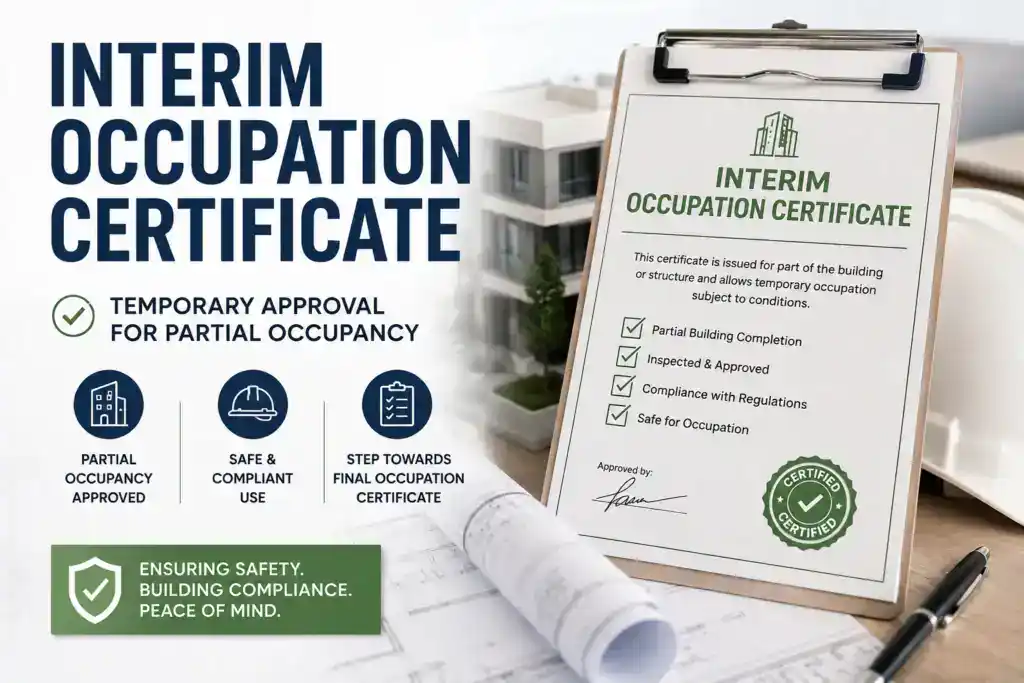
  • At project completion: Compliance building reports support the issue of an Occupation Certificate by confirming all elements have been properly completed. No certifier NSW can issue an OC without the backing of thorough documentation.
  • Compliance building reports are required when you are try to buying a property, planning a large renovation or resolving strata disputes. They identify unpermitted constructions, fire safety loopholes and accessibility issues.
  • For legal and insurance considerations lenders, insurers and lawyers sometimes may request for compliance building reports as part of their due diligence, it is particularly for commercial or multi-residential properties.

They simply use, these reports provide evidence that a structure meets or does not meet with the safety criteria.

How Does the Building Certification Process Work?

Here’s a clear overview of how building certification typically works in NSW:

Step 1 – Pre-application advice

The developers and builders may consults with building certifier NSW to review their plans and identify compliance issues before formal applications are lodged.

Step 2 – Construction Certificate or CDC

A building certifier NSW issues a construction certificate(CC) that confirms the design meets to the relevant codes and development consent. Eligible projects may obtain a Complying Development Certificate instead.

Step 3 – Staged inspections

As construction progresses, the building certifier NSW may conducts some mandatory inspections and documents verification which is contributing to the project’s compliance building reports.

Step 4 – Occupation Certificate

When the build is completed, a building certifier NSW takes out a final inspection. If everything checks out, an Occupation Certificate is issued for the building and the official confirmation the building can be occupied.

Step 5 – Ongoing compliance

For commercial and strata buildings, responsibilities continue. Annual fire safety statements and periodic inspections remain the building owner’s ongoing duty. A building certifiers Australia can advise on what ongoing obligations apply to your building class.

What Happens If a Building Isn’t Compliant?

Failing to meet compliance requirements can have serious consequences, including:

  • Stop-work orders from councils or a building certifier NSW
  • Fines and penalties under state planning laws
  • Difficulty selling a property with unapproved structures
  • Insurance complications if a non-compliant element is linked to a claim
  • Legal liability if a person is injured due to a safety defect

This is why partnering with a reputable building certifiers Australia early in the project lifecycle and keeping compliance building reports up to date is always the right investment. The best building certifiers Australia professionals flag issues before they become costly problems.

How to Choose the Right Building Certifier

When choosing a building certifier NSW or a building certifiers Australia for your project, consider the following qualities:

Accreditation: Ensure they have the right accreditation for your building class. All building certifiers Australia need to be accredited by their state or territory building regulator. NSW has tiered accreditation for certifiers, depending on the type of building they are able to certify.

Relevant experience: Select a person who has practical experience in your type of project. Each project type residential, commercial, industrial, and mixed-use—has its own set of compliance challenges that a building certifier NSW or building certifiers Australia can handle with ease.

Explain things in simple terms: The best certifiers can communicate in a straightforward manner, catch problems early and get your project moving without needless delays.

AllCert Group’s certified professionals provide rapid and comprehensive building certification and compliance building reports throughout NSW and Australia. We interface directly with architects, developers and builders to streamline approvals and ensure projects are on track.

Frequently Asked Questions (FAQs)

Q. What is the difference between a Construction Certificate and a Compliance Certificate?

A Construction Certificate is issued before work begins, confirming that proposed plans comply with applicable codes and development consent. A Compliance Certificate is a broader term for any certificate confirming a specific element of the building meets the required standard at a given time.

Q. Do I need a building certifier for minor renovations?

Minor cosmetic work typically doesn’t require formal certification. However, structural changes or alterations to regulated systems will generally require a Construction Certificate or CDC, and a building certifier NSW will need to be involved. Always confirm the requirements before starting.

Q. What are compliance building reports used for?

They verify that a building meets Australian standards and codes. Compliance building reports are used by developers, buyers, lenders, and insurers to confirm a building’s regulatory status — and are essential for obtaining Occupation Certificates.

Q, How long does it take to get an Occupation Certificate?

For straightforward residential projects, a few weeks after construction completion is typical, provided all documentation and inspections are complete. Working with a reliable building certifier NSW or building certifier Australia like AllCert Group helps keep the timeline as short as possible.

Q. What happens if I find unpermitted work on a property I want to buy?

Request compliance building reports to understand the full extent of the issue before committing. The vendor may need to obtain retrospective approvals or adjust the price to cover rectification costs.

Q. Are building certifiers and building inspectors the same?

Not quite. A building certifier NSW is accredited to issue legally binding certificates and approvals under state legislation. A building inspector conducts physical assessments but may not hold authority to issue formal certificates. A qualified building certifier Australia combines both roles inspecting and certifying under one accreditation.

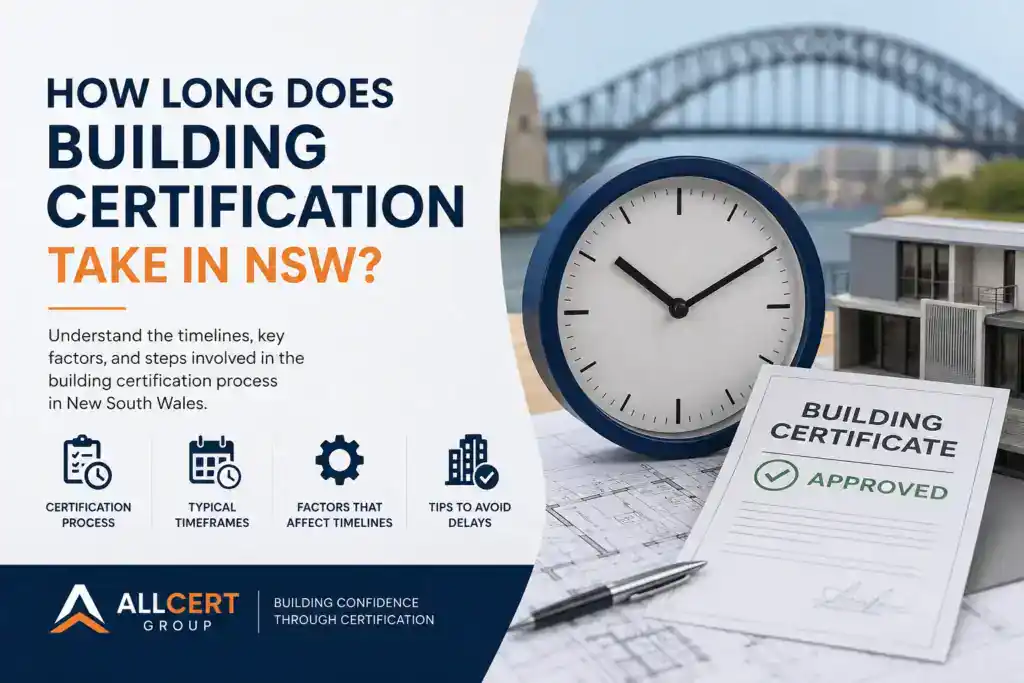
How Long Does Take Building Certification in NSW? A Timeline Guide

When you are considering a construction or renovation project in NSW, then you may be asking yourself that how long does it takes the building certification in NSW really take? Whether you are a homeowner, developer or architect, you have to knowing the certification timeline whih can help you about plan your project with confidence and avoid potential pitfalls.

We explain every step of the building certification process in NSW, provide realistic timelines and provide an insight into what might accelerate or slow your approvals.

building certification in NSW

What Does Building Certification in NSW Mean?

Building certification in NSW is the formal process used to ensure that your building or development meets the requirements of the National Construction Code (NCC), Building Code of Australia (BCA) and applicable planning laws. Licensed building certifiers NSW are responsible for the legal certificates required to get construction work underway, to continue at various stages and to be able to occupy the building.

In NSW, there are two types of building certifiers:

  • Private certifiers – professionals who are “accredited” by the client and work directly for them for quicker and more flexible service
  • Council certifiers are council employees who are responsible for certifying dog licenses.

Council certifiers are council staff members that are hired to certify dog licences.

In NSW, most developers and builders use a private building certifier NSW due to their speed, ease and project-specific expertise.

The Building Certification Timeline in NSW – Stage by Stage

It is a detailed account of the timeline for building certification in NSW.

The entire certification process is a multiple stage process. The practicle description of what to expect at each step below.

Stage 1 – Pre-Application and Engagement (1-2 Weeks)

To receive any certificates, you must have to first hire a building certifier Australia in NSW. At this point, your certifier will examine your project scope, plans and relevant regulations. They will be able to detect any potential compliance problem, early and specific required documents.

One of the best ways to minimise delays later in the process is to engage an experienced private certifier at this early stage.

Stage 2: Complying Development Certificate/Development Application (2-8 Weeks)

This totally depending on the type of project, a Complying Development Certificate (CDC) is required and the council’s Development Application (DA) process will be followed.

  • CDC (via a building certifier NSW): 2-4 weeks (typically). A quick-track approval route for suitable residential and commercial projects that satisfy planning requirements. The full assessment is carried out by a private certifier and no involvement of council is required.
  • DA (via council): May take 6-16 weeks or more depending on the complexity of the project, council workloads and if further referrals are required.

In the case of a CDC project, opting for a CDC path with a qualified building certifier Australia is almost always quicker.

Stage 3: Construction Certificate (CC) (1-3 Weeks)

After the development certification process has been done, a Construction Certificate (CC) is required to to start or begin works on the site. A Building Certifier in NSW can able to check your detailed construction plans, specific and engineering documents to ensure compliance with the Building and Construction Act 1998 and other standards.

The duration of the process: A private certifier can provide a complete package application in 5-10 business days. If plans are not fully completed or are not compliant, this will take longer.

Stage 4: Mandatory inspections during construction (Varies)

Your building certifier Australia will conduct a series of critical stage inspections during the construction process. They range with respect to building class and type of work, but typically encompass:

  • Footings inspection
  • Slab/formwork inspection
  • Framing inspection
  • Waterproofing inspection
  • Final inspection prior to occupation

These inspections are scheduled by the builder and must be completed at each stage before the next phase of construction can proceed. A responsible building certifier in NSW will aim to inspect within 24–48 hours of booking being made.

Stage 5: Occupation Certificate (OC) (1–2 Weeks)

The Occupation Certificate (OC) is the final level of building certification in NSW. It certifies the building’s safety and suitability for occupancy. Without an OC, no one may lawfully move into or operate from a new building.

Timeframe: If all inspections are completed and everything is in place, a competent building certifier in NSW can issue the OC within 5-10 business days. Delays are common when outstanding flaws need to be repaired or when necessary certificates, such as fire safety compliance, are not yet available.

Summary: Typical Building Certification Timeline in NSW

A broad overview of timescales for each certification level is provided below:

  • Pre-Application & Engagement: 1–2 weeks
  • CDC (fast-track): 2–4 weeks
  • DA (council approval): 6–16+ weeks
  • Construction Certificate: 1–3 weeks
  • Mandatory Stage Inspections: Ongoing throughout construction (24–48 hrs per inspection)
  • Occupation Certificate: 1–2 weeks

In total, the building certification in NSW from start to finish can take anywhere from 3 months to over 12 months, depending on the project scale, approval path, and how well-prepared your documentation.

What Can Affect Your Building Certification Timeline?

Several factors can either speed up or delay your project. Here are the most common ones:

  • Quality of documentation: Incomplete or non-compliant plans are the single biggest cause of delays in building certification in NSW.
  • Approval pathway: CDC is much quicker than a DA. If your project is eligible, a private building certifier NSW can do this without council.
  • Project complexity: A large mixed use commercial development will be more complex than a home renovation.
  • All parties are responsive: Delays of consultants, engineers or builders waiting for information can mount up.
  • The choice of certifier: By working with an agile and responsive building certifier Australia, with a dedicated team, you will get a faster turnaround at every stage.

How to Speed Up Your Building Certification in NSW

There are ways to speed up your building certification in NSW.There are methods to speed up your building certification in NSW.

Here are some tips to keep your project on track:

  • Get your building certifier NSW involved early – before plans are completed not after.
  • Please make sure all plans are BCA compliant before submitting your application.
  • If your project is eligible, use the CDC pathway.
  • Schedule required inspections as soon as possible, never leaving your builder in limbo.
  • Prepare all OC documentation in advance — do not wait until construction is complete.

Why Choose AllCert Group for Building Certification in NSW?

At AllCert Group, we are NSW Fair Trading-accredited private certifiers based in Sydney, servicing projects across NSW and Australia. We understand that time is money on any construction project, which is why we prioritise fast turnarounds without compromising on compliance.

Our team of expert building certifiers Australia wide works directly with architects, developers, and builders to simplify every stage of the process — from Construction Certificates and CDCs through to final Occupation Certificates. We respond to new enquiries within 24 business hours and deliver the clarity your project team needs to stay on programme.

If you want to know how long building certification in NSW will take for your specific project, speak to our team today.

Frequently Asked Questions (FAQs)

Q. How long does building certification in NSW take from start to finish?

It depends on the project type and approval pathway. A straightforward residential project using the CDC pathway can be certified in as little as 3–4 months in total. Larger or more complex projects going through the DA process can take 9–12 months or more from initial engagement to Occupation Certificate.

Q. What is the difference between a CDC and a DA in NSW?

A Complying Development Certificate (CDC) is a fast-track approval issued by a private building certifier NSW for eligible projects that meet pre-set planning standards. It does not require council involvement. A Development Application (DA) is lodged with council and involves a broader assessment, which takes significantly longer.

Q. Can I start building without a Construction Certificate in NSW?

No, Under NSW building legislation, you cannot commence any building work until a Construction Certificate (or a CDC that includes the CC function) has been issued. Starting work without one is a legal offence and can result in stop-work orders, penalties, and difficulties obtaining an Occupation Certificate later.

Q. How much faster is a private building certifier NSW compared to council?

Generally, a private building certifier in NSW can issue a Construction Certificate or an Occupation Certificate significantly faster than a council certifier, often within 1–3 weeks for well-prepared applications. Council processing times vary but can take considerably longer due to workload and internal processes.

Q. What happens if I move into a building without an Occupation Certificate?

Occupying a new building without a valid Occupation Certificate in NSW is a breach of the Environmental Planning and Assessment Act. You could face fines, orders to vacate, and significant issues with insurance and property title. Always ensure your building certifier NSW has issued the OC before occupation.

Q. Can AllCert Group certify projects outside Sydney?

Yes, While AllCert Group is based in Sydney, we are an accredited building certifier Australia-wide, providing certification and BCA compliance services across NSW and to clients in other states. Contact us to discuss your project location and requirements.